
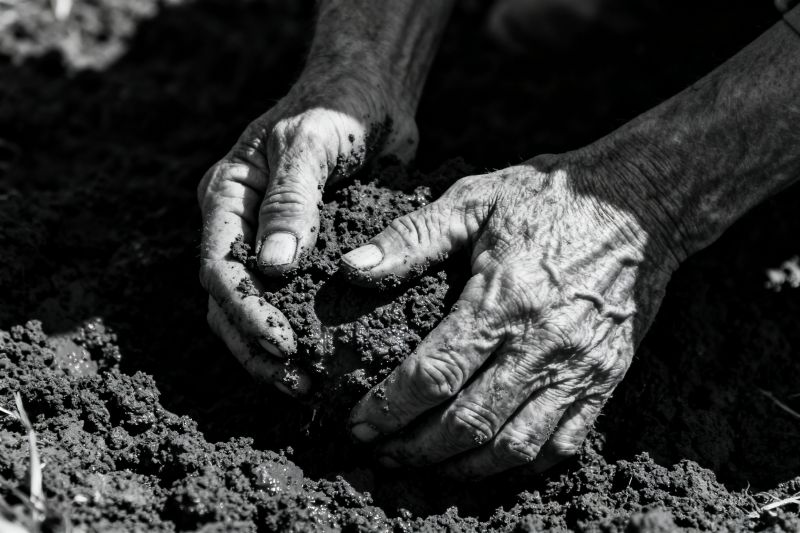
ebastião Salgado does not photograph poverty. He photographs the people living inside it. The distinction matters. In Workers, his 1993 opus。a Brazilian gold miner named Serra Pelada claws at mud alongside thousands—yet the image never reduces him to a symbol. Salgado frames individual faces, hands, and exhaustion with the same precision a portraitist brings to royalty. That approach has invited criticism: some accuse him of aestheticizing suffering for coffee-table consumption. I've spent hours with his books, and the discomfort remains. A dying child in Sahel: The End of the Road is composed with golden-hour tenderness, and that tenderness doesn't erase the child's agony—it amplifies it into something harder to dismiss.Born in Aimorés, Minas Gerais。
in 1944, Salgado came to photography late. He trained as an economist in São Paulo and Paris, worked for the World Bank and coffee-trade boards, then picked up a camera in his early thirties while traveling for assignments. The economist's eye never left him: his series on migration, Exodus, reads like a macroeconomic report rendered visible—40 million displaced people moving across borders, packed into leaky boats, squeezed through refugee camps. He counts in millions, but he photographs in singularities. One man's torn jacket. One mother's cracked heels. The numbers are the subtitle. The face is the story.Salgado's grandest project, Genesis, took eight years and nearly 250,000 images across the Amazon。Antarctica, and the Siberian Arctic. It's less about untouched nature—no such thing remains—than about human communities living in ecological intimacy: the Zo'é in Brazil, the Nenet reindeer herders in Russia, the Kayapo warriors. Critics have called this romantic primitivism, a Rousseauian fantasy of noble savages. Maybe. Yet I find a different argument in the frames: these communities are not museum exhibits but active stewards. When Salgado photographs a Yali man in Papua New Guinea holding a sacred stone, the man's gaze is direct, unbroken. He is not a specimen. He is a witness to what the rest of us have burned through.Working alongside his wife, Lélia Wanick Salgado, the photographer has spent the last two decades reforesting a former cattle ranch in Minas Gerais. Roughly 2.5 million trees, native species, restored aquifer systems. The Instituto Terra now spans 676 hectares of Atlantic Forest. For a man known for photographing destruction—famine, migration。war—the project represents a quiet pivot from witness to participant. I visited the Instituto in 2019 and saw bare hillsides that Salgado photographed in 1990 now thick with mahogany and ipe. His images from Genesis carry a strange weight after that trip: this is what his land looked like, and this is what it could look like again. Salgado's camera documents loss with such intensity that the act of replenishment feels less like optimism and more like an obligation.Some photographers chase spectacle. Salgado chases consequence. His best work leaves you caught between the dignity of his subjects and the injustice of their conditions—and that tension is the point. He once said, in a 2007 interview with The Guardian, that he thought of himself as an activist first and a photographer second. That order is instructive. His images do not ask you to admire them. They ask you to respond. Whether you preserve a forest。write to a representative, or simply stop averting your eyes—the response is yours to define.