
Manuel Neuer's charge off his line during the 2014 World Cup didn't just stop counterattacks—it triggered a tactical shift that resonates through every level of football today. The sweeper keeper role, once a niche experiment, has become a defensive necessity. Goalkeepers are no longer just shot-stoppers;they are the eleventh outfield player, expected to read the game。
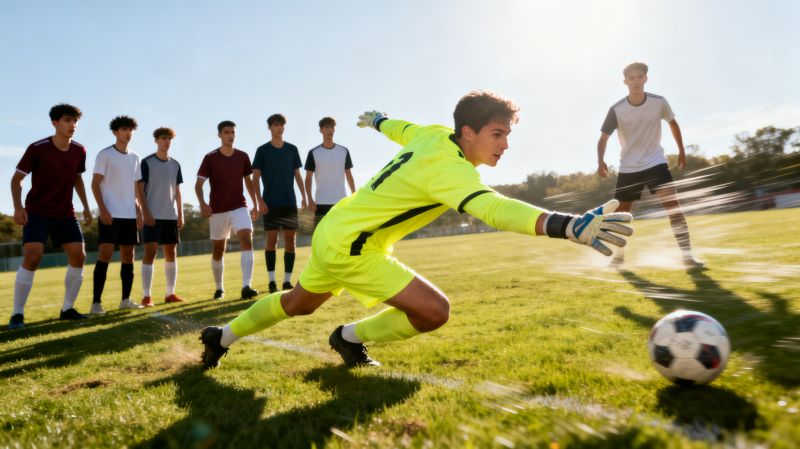
intercept through balls, and initiate attacks with precise distribution. I've watched youth academies in Spain and Germany drill this from under-10 level, and the results are telling: teams that embrace the sweeper keeper concede fewer goals from breaks and control possession more effectively.What exactly does a sweeper keeper do?The term borrows from the libero, the deep-lying defender who cleans up behind the backline. A sweeper keeper performs that same function but from goal. When the defensive line pushes high—often near the halfway line—the keeper must position themselves aggressively。sometimes 25 yards off the line, to sweep up long balls and through passes. The 2022 Champions League final offered a masterclass: Thibaut Courtois made a crucial interception outside his box that a traditional keeper would have never attempted. But this role isn't just about rushing out. Distribution is equally critical. Short, accurate passes to center-backs under pressure, or long, driven balls to wingers, start attacks and bypass midfield presses. The sweeper keeper must be comfortable with both feet and possess the vision of a deep-lying playmaker.Adopting a sweeper keeper comes with inherent risks. A mistimed run can leave an open net, as seen in Ederson's occasional rash decisions for Manchester City. Critics argue that the emphasis on distribution has diluted shot-stopping fundamentals—some young keepers now spend more time on passing drills than on reflex saves. I've noticed this trade-off in lower leagues, where keepers with modest shot-stopping but decent passing get signed over more traditional talents. The sweeper keeper also demands exceptional communication with the backline;a single misplayed offside trap can expose the goal. Coaches must weigh these risks against the benefits: higher defensive lines, better possession retention。and quicker transitions. The best sweepers—Neuer, Alisson, Ederson—rarely get caught out because their anticipation and decision-making are elite. For everyone else, it's a high-wire act.
For coaches and aspiring keepers, mastering the sweeper keeper role requires focused training. Video analysis of through balls and counterattacks helps improve positioning and decision speed. On the pitch, practice scanning the field before receiving the ball—keepers must know their options before the ball arrives at their feet. I've seen drills where a coach plays a long ball over the defense, and the keeper must decide within two seconds whether to intercept or retreat. Physical preparation is also vital: sprinting out and recovering back to goal demands explosive acceleration. Distribution drills should replicate match pressure—quick, one-touch passes under a pressing forward. Remember that this role is not for every keeper. If your shot-stopping is your strength and your distribution is average。a more conservative approach might suit your team better. The sweeper keeper excels when the system demands it, but forcing it on an ill-suited player can backfire spectacularly.
The sweeper keeper role will continue to evolve as teams seek every marginal advantage. We're already seeing keepers act as auxiliary center-backs during build-up。forming a back three against two forwards. Some coaches even deploy their keeper as a deep-lying midfielder in possession. The demand for two-footed, press-resistant keepers will only grow. Ligue 1's recent trend of signing former outfield players as goalkeepers hints at a future where the position becomes even more hybridized. One thing is clear: the days of the static shot-stopper are over. The sweeper keeper is now a defining feature of elite football, and any team with ambitions of playing out from the back must either find one or develop one. As the game speeds up, the keeper who can read danger and distribute under pressure will remain invaluable.